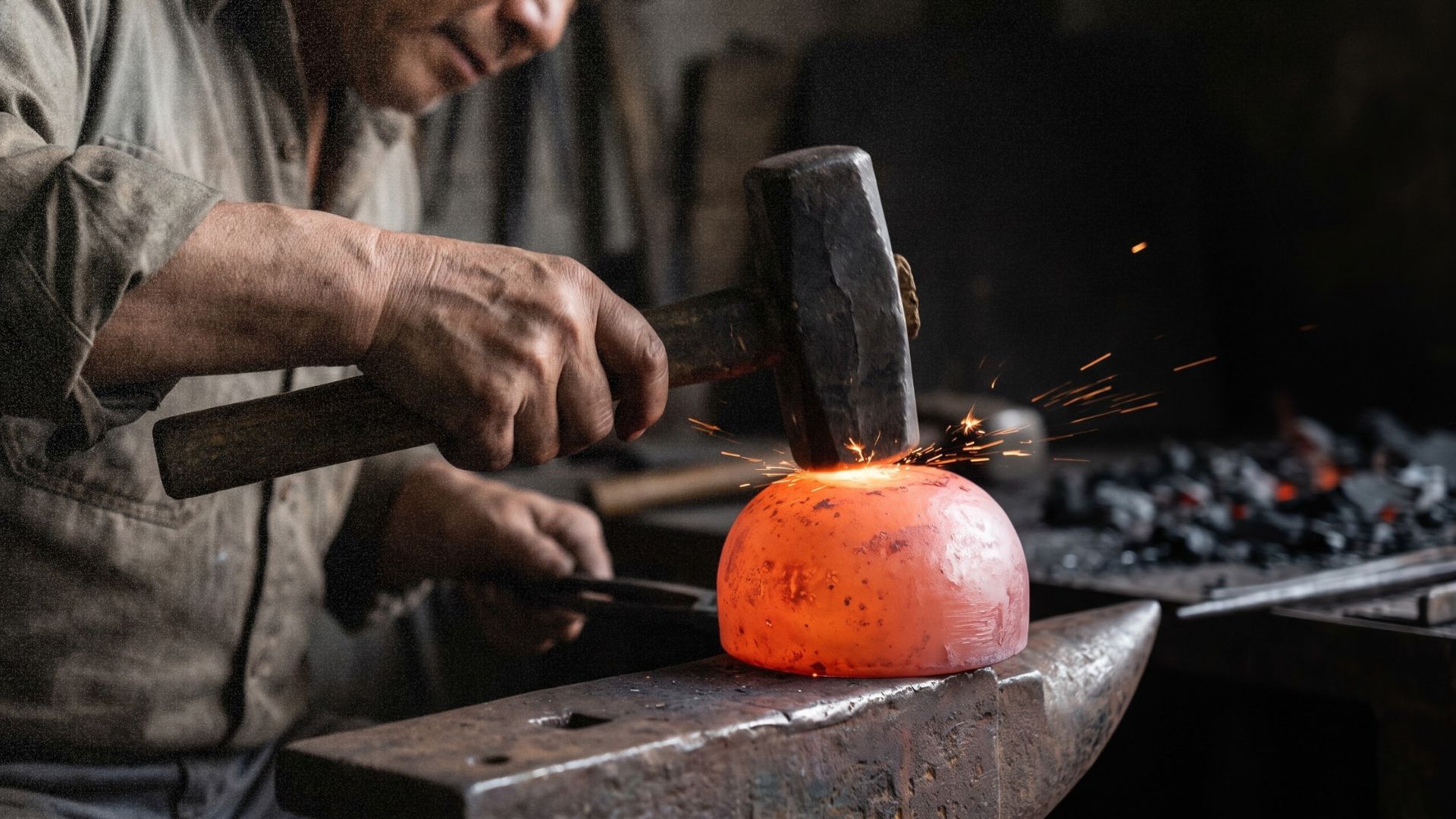
Strike a singing bowl and the sound doesn't behave the way most sounds do. It doesn't peak and fade in a straight line. It shifts, shimmers, seems to move around itself before settling into quiet, sometimes over the better part of a minute. That behavior isn't an accident, and it isn't mysticism either. It comes down to a specific alloy, a specific process, and some genuinely interesting physics.
What's actually in the metal
Most people assume singing bowls are made from some exotic, secret blend of metals. That idea shows up a lot in marketing copy, usually some version of a "seven sacred metals" formula tied to planets or chakras. It makes for a good story, but it isn't how most quality bowls are actually made, and reputable makers will tell you as much directly.
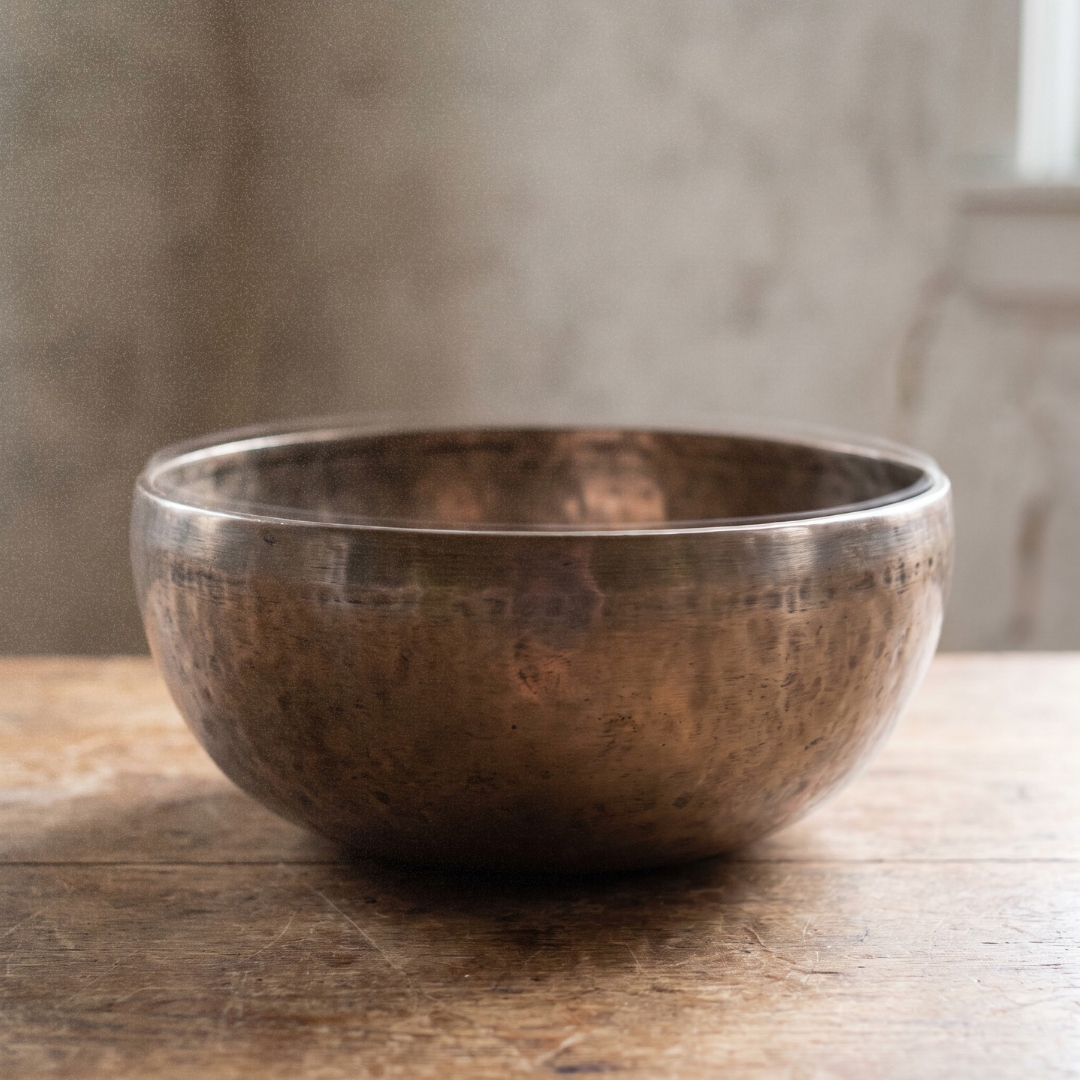
In practice, the bowls prized for their sound are made from bell metal bronze, a high-tin bronze alloy, typically somewhere around 78 percent copper and 22 percent tin. That ratio isn't arbitrary. It produces a metal that's harder than plain iron but still elastic enough to ring rather than thud when struck, the same property that has made bronze the material of choice for bells and gongs across multiple cultures for centuries. Cheaper alternatives exist, brass, aluminum, and various simplified alloys, but they tend to produce a flatter, shorter-lived tone than proper bell metal.
Hand-hammered versus machine-made
There are two broad ways a metal bowl gets its shape. Traditional bowls are hand-hammered from a heated bronze disc, worked by a craftsperson or a small team striking in rhythm, gradually forming the disc into a bowl shape over many passes. Machine-made bowls, by contrast, are cast or spun into a mold, a faster and more consistent process that produces a more uniform, predictable tone.
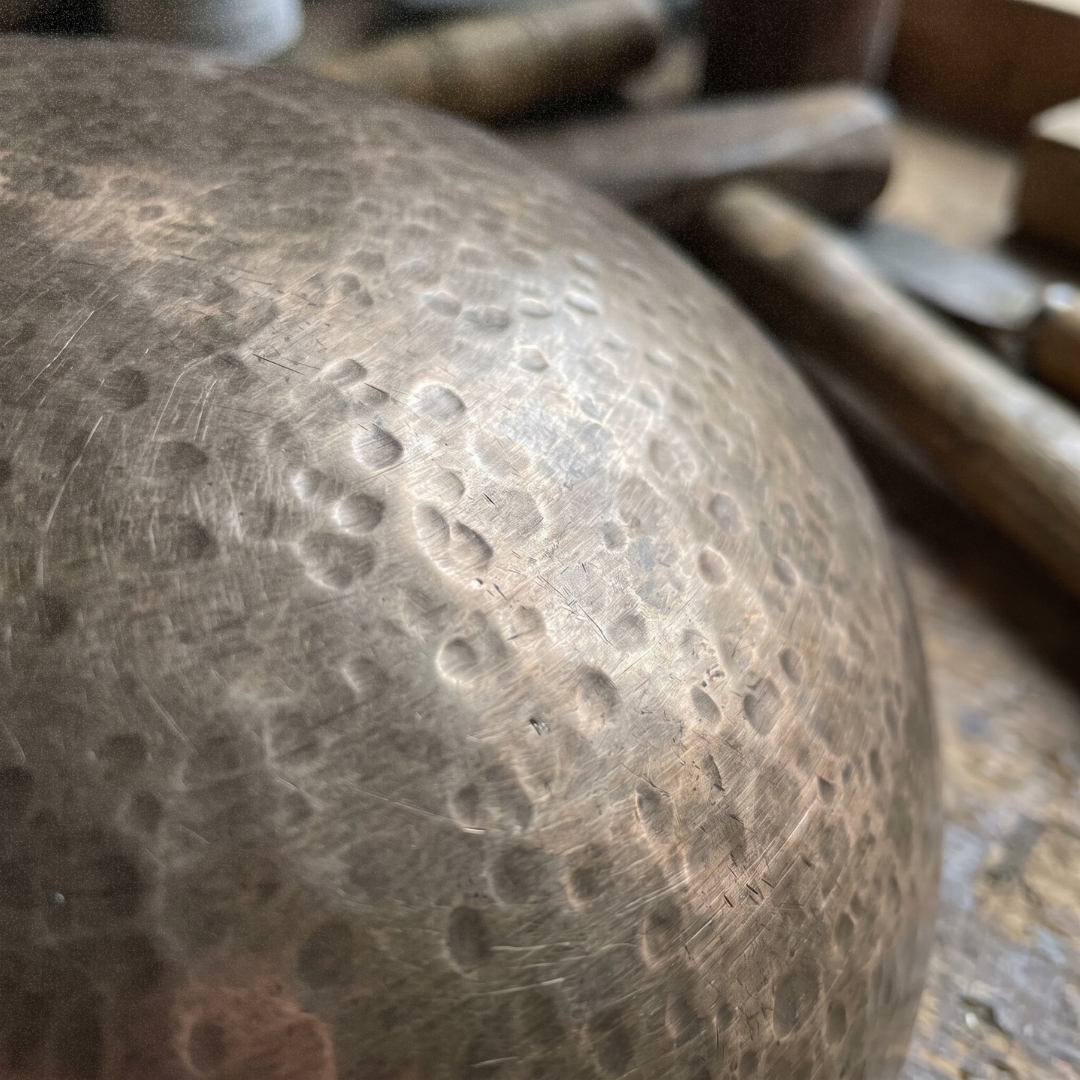
Neither process is fake. But they produce genuinely different results. Hand-hammering leaves subtle irregularities in the metal, slightly uneven wall thickness, small asymmetries in the curve, faint marks from individual strikes, and those irregularities are precisely what give a hand-forged bowl its more complex, less predictable overtone structure. A traditional hand-forged bowl doesn't start with a fixed note in mind. Its final pitch and character emerge only after the forging is complete, shaped by decisions made strike by strike.
The physics of why it "sings"
When a mallet strikes or circles the rim of a bowl, the metal doesn't vibrate as a single uniform unit. It flexes in what's called a standing-wave pattern, different sections of the rim moving outward while others move inward at the same moment, then reversing. That flexing pattern is what pushes the surrounding air into the sound waves you actually hear.
Because the bowl isn't a perfectly uniform shape (even a well-made one has tiny variations from hand-forging), it doesn't produce a single clean frequency. It produces several frequencies at once, called overtones, layered on top of each other. When two of those overtones sit close together in frequency, they interfere, alternately reinforcing and canceling each other in a repeating pattern. That interference is called a beat frequency, and it's the physical explanation for the pulsing, breathing quality a good bowl seems to have as it rings. Nothing about it is symbolic. It's the same physics that makes two guitar strings tuned slightly apart pulse against each other.
Why no two bowls sound the same
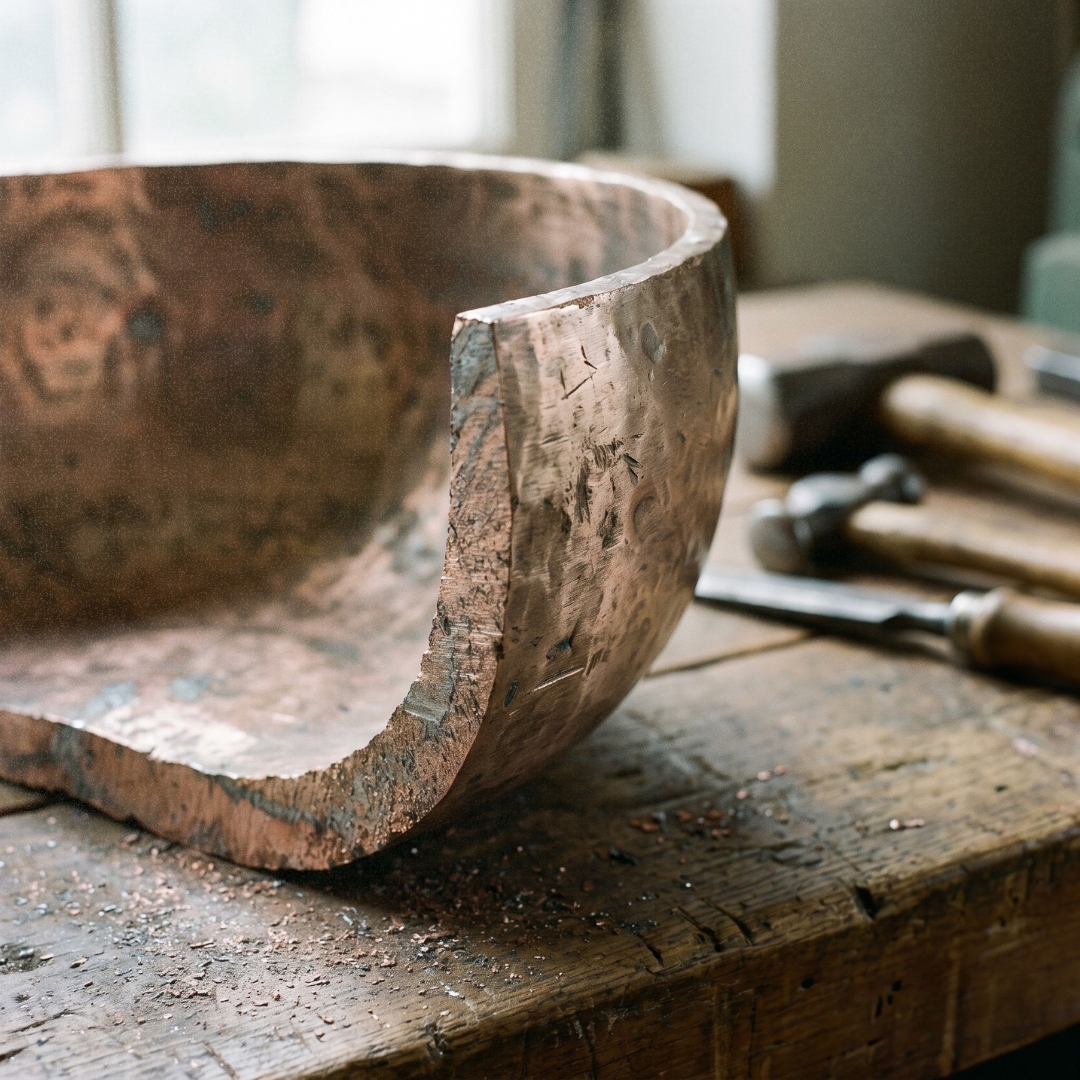
Put these two factors together, alloy and hand-forming, and you get an instrument where genuinely no two bowls are identical, even from the same maker on the same day. Wall thickness, curvature, rim shape, and the exact pattern of hammer strikes all interact to shape which overtones are present and how long they last. A slightly different strike pattern in one spot can shift the entire tone.
This is also why experienced players judge a bowl by listening for at least twenty to thirty seconds rather than a single strike. A quality bowl tends to keep revealing new layers as it rings, not just getting quieter, but actually changing character over time. A flatter, machine-made tone tends to just fade at a steady volume without that evolving quality.
A brief, honest note on where the mysticism comes in
Singing bowls do have a long history across the Himalayan region, and multi-metal recipes tied to symbolic or spiritual meaning are part of that history and culture. That's a real tradition, and it's worth acknowledging as such rather than dismissing outright. What's less accurate is treating those symbolic claims as if they were the acoustic explanation for the sound. The shimmering, layered tone people notice has a physical cause: alloy composition and the mechanics of hand-forging. The cultural meaning and the acoustic explanation aren't in conflict, they're just two different things, and it's worth being able to tell them apart.