
September is nearly over, and it's hard to say exactly where it went. There were busy weeks and quiet ones, a few things that went well, and several that kept sliding to next week. Now another month is about to start, and you're already carrying the last one's loose ends into it.
Waiting for January to take stock is too long. Reviewing every day is too much. A month sits neatly in between: long enough to show a pattern, short enough to change course while it still matters.
This is a simple 30-minute routine to close one month and open the next. Four steps, a notebook, and a kitchen table are all you need.
Why a monthly rhythm works
A month gives you enough distance to see trends. One bad Tuesday tells you nothing, but four weeks of the same recurring drain tells you plenty.
Annual goals have the opposite problem. They're so far away that they drop out of sight by March, while a goal set for the next four weeks stays visible the whole time.
There's also something useful about the date itself. Researchers have documented what they call the fresh start effect: aspirational behavior, like going to the gym or committing to a goal, rises right after temporal landmarks such as the start of a new week, month, or year. The explanation is that these landmarks open a new mental accounting period, filing past shortcomings under the old chapter and leaving the new one clean.
The practical implication is worth taking seriously. If the first of the month naturally gives you a small motivational boost, you get twelve of them a year instead of one, and none of them requires waiting until January.
Before you start
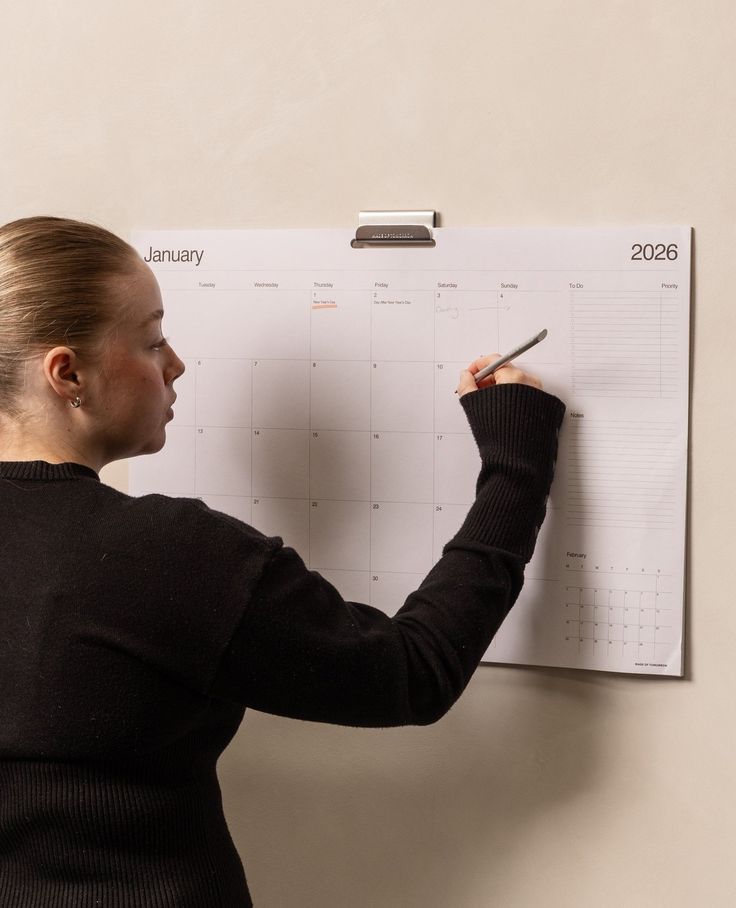
Pick a fixed time so this doesn't depend on remembering. The last day of the month works well, and so does the first morning of the new one. Put it in your calendar now.
Bring a notebook, your calendar, and a timer set to 30 minutes. Turn off notifications and leave your phone out of reach unless you need it for your calendar.
One more thing: this isn't a grand planning session. Keep it quick and light. The value comes from doing it every month, not from doing it perfectly once.
Step 1. Look back
Start by writing answers to three questions.
What went well? Include the small things: a difficult conversation you handled, a habit you kept for two weeks, an errand that had been hanging over you. Most people reflexively list only what's unfinished, which gives a distorted picture of the month.
What drained me? Look for what actually cost you energy rather than time. It might be one recurring meeting, a commute, an unresolved situation with someone, or simply saying yes too often.
What keeps getting postponed? These are the items that appear on every weekly list and never get done.
For that last group, make a decision rather than moving them forward again. Each one gets one of three labels: do it this month, hand it to someone else, or drop it. If something has survived three months of postponement, that's useful information about how much you actually want it.
Write all of this down. Thinking it through in your head feels similar but doesn't produce the same clarity, and you'll want something to compare against next month.
Step 2. Clear your space
Choose one area only. Your desk, your bag, your wallet, or your nightstand. Ten minutes is enough for one of them and not enough for your whole home, so resist the temptation to expand.
Work quickly. Throw away the obvious rubbish, return things to where they belong, and gather any paperwork that needs handling into a single pile you'll deal with later.
Then do a short digital version. Archive or delete what's cluttering your inbox, clear your phone's home screen down to what you actually use, and empty your downloads folder.
The goal isn't a spotless environment. It's less background noise competing for your attention every time you sit down.
Step 3. Clear your calendar
Open next month and look at the whole thing before you add anything to it.
Notice which weeks are already crowded. If two events land in the same heavy week, move one now while it's still easy. Protect a few evenings by leaving them genuinely empty rather than assuming they'll stay that way.
Look for one commitment you accepted out of habit or obligation and don't really want. Cancel or postpone it. One removal per month adds up quickly.
Then block time for what matters to you personally, whether that's exercise, a project, or an evening with someone. Anything that isn't in the calendar tends to lose to whatever is.
Step 4. Choose one focus
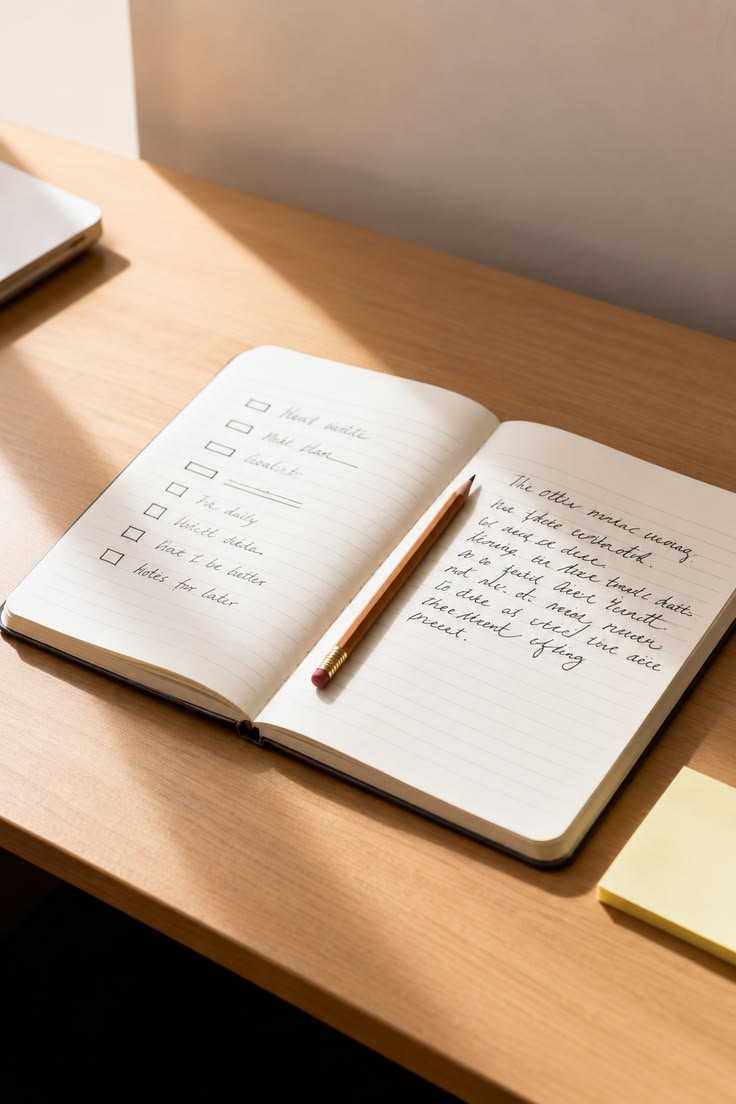
Write one sentence naming your focus for the month. Not five priorities. One.
Make it concrete enough to recognize when it's done: "finish the course I started," "walk three times a week," "sort out the insurance paperwork." A single focus survives a chaotic week, whereas a list of five usually collapses together. If you want a longer view on this, we made the same case for the end of the year in The Last 100 Days.
Underneath it, write the smallest first step you can take this week. Something you could finish in fifteen minutes.
Put the sentence somewhere you'll see it daily: your desk, your fridge, or the first page of your notebook.
Every other idea goes on a separate "later" list. You're not discarding them, just not carrying them around for the next four weeks.
Make it stick through the month
Around the middle of the month, take two minutes to check in. Am I still moving on my focus? Does it still make sense? That's the whole review.
The fresh start boost is good at getting things going and less reliable at keeping them going, which is exactly why this small mid-month check matters.
If you drift, restart from that day rather than waiting for the next month. A reset you resume on the 18th is worth far more than one you postpone to the 1st.
Keep your pages. After a few months, the patterns become obvious in a way that no single month can show you, particularly in the "what drained me" answers.

If 30 minutes feels like too much
There's a five-minute version. Write down one thing that went well, one thing you want less of, and one focus for the month. That's it.
A short reset you actually do beats a thorough one you keep skipping.
A new month doesn't require a new you. It just needs a short pause to look back before you walk forward.
Put 30 minutes in your calendar for September 30th now, while you're thinking about it. Then bring one clear focus into October instead of the whole of September's leftovers.