
"Notification fatigue" gets used loosely enough that it's worth asking what's actually been measured, rather than just repeating the phrase. The short answer: more than you'd expect, and the findings are more specific than a general sense of being tired of pings.
How many notifications people actually get
Estimates vary depending on how a study measures things, phone checks, push notifications, or total pickups, but the range that keeps showing up across recent research is not small. Some surveys put the average adult somewhere in the neighborhood of a few dozen push notifications a day, with younger users considerably higher, often more than a hundred. Separate research on phone pickups, not notifications specifically, but how often people look at their phone at all, has landed anywhere from roughly 140 to over 200 times a day depending on the study and the year.
The range itself is telling. Different methodologies produce different numbers, but none of them describe a quiet phone.
What a single notification actually costs
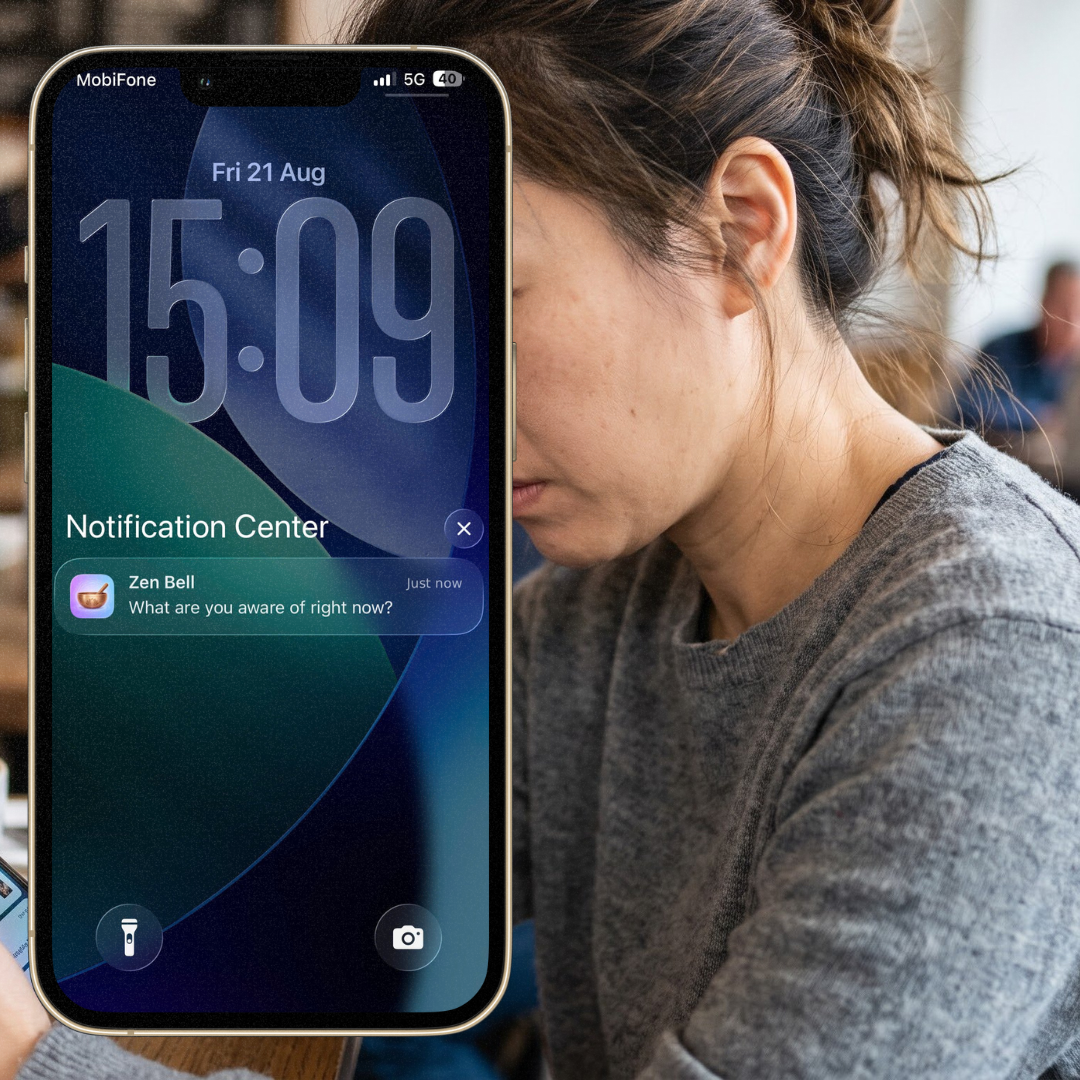
The more useful research isn't about volume. It's about what one notification does to a task already in progress. A study published in the journal Computers in Human Behavior measured this directly and found that a single smartphone notification disrupted a person's concentration for around seven seconds, even when the person didn't pick up the phone or respond to it. The disruption came from the notification itself, not from acting on it.
Seven seconds sounds small until you multiply it by however many notifications land during a focused block of work. It also doesn't account for a separate, larger cost: researchers studying workplace interruptions have found that returning to full focus after a meaningful interruption, not just a glance at a lock screen, but an actual task switch, can take on the order of twenty minutes or more. Volume and depth of disruption are two different problems, and both show up in the research.
Why fatigue is the right word, not just annoyance
"Fatigue" implies something that accumulates rather than something that happens once and resets. That distinction matters here. The cost of a single notification is small and recoverable. The cost of dozens, arriving all day, every day, compounds in a way that a single glance at the data doesn't capture. It's less like one loud noise and more like a low hum that never fully stops, one your attention has to keep partially allocated toward, whether or not you consciously notice it.
This is also why turning off notifications entirely doesn't fully solve the problem for most people. The habit of checking, built over months or years of intermittent reward, tends to persist even after the pings stop. The fatigue isn't only caused by the notifications arriving. It's also caused by the checking behavior they trained in the first place.
Not every interruption is the same kind of cost
It's worth being precise here rather than treating all interruptions as identical. The research on notification fatigue and attention residue describes what happens when an interruption asks you to process new information, a message to read, a decision to make, a new task to begin. That's a meaningfully different category than a signal that asks for nothing but a brief pause, a breath, a moment of noticing where you are.
That distinction doesn't undo the research on notification fatigue. It just points toward a design question worth asking: if interruptions are unavoidable in a knowledge-work day, does the interruption ask you to start something, or does it ask you to simply be where you already are for a few seconds before continuing.
Frequently asked questions
How many notifications does the average person get per day? Estimates vary by study and by age group, but recent research generally puts push notifications somewhere in the dozens per day for adults, with meaningfully higher counts for younger users.
How long does it take to recover focus after an interruption? A brief notification glance disrupts concentration for a matter of seconds. A full task-switching interruption, actually stopping to address something, has been measured at closer to twenty minutes or more to fully regain focus.
Does turning off notifications fix notification fatigue? Partially. It removes new interruptions, but the checking habit built by intermittent notifications often persists on its own, which is why fatigue can linger even after alerts are reduced.
This is part of why Zen Bell's bell is built to ask for nothing but a breath, not a message to read or a decision to make.