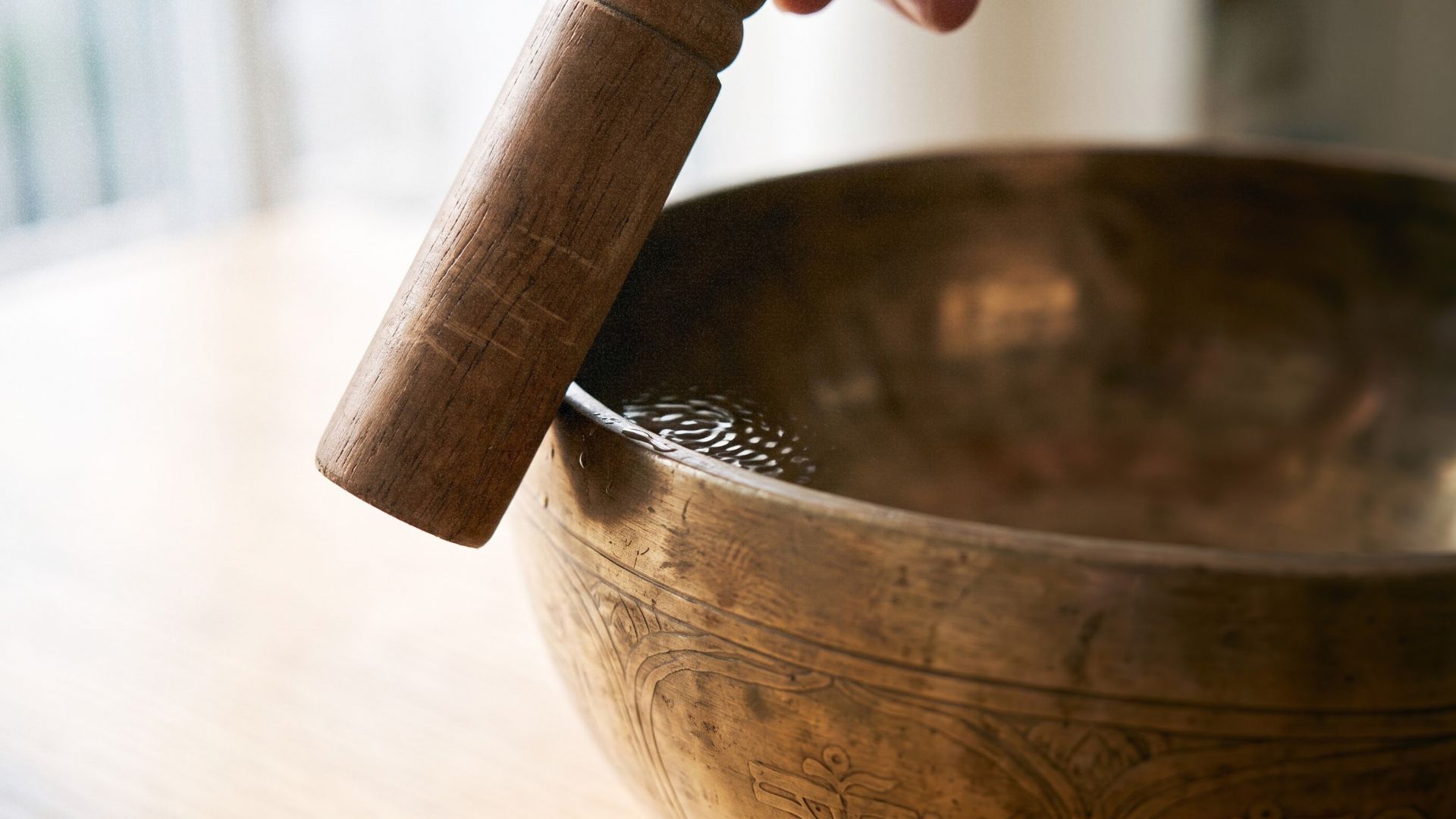
A note, or a moving wave?
If you've ever struck a handcrafted bronze bowl yourself, you already know the strange thing about it: the sound never holds still. It moves.
A synthesized bell, the kind built into most apps, is a single note. Flat, clean, finished the moment it starts. A real singing bowl is something else entirely, a small physical event, unfolding in real time.
The instant the mallet makes contact, the whole body of the bowl begins vibrating at once, across many amplitudes. What reaches your ear isn't one tone but a stack of overtones, shifting and colliding with each other as they ring. When two close frequencies overlap, they create a pulse of their own, rising and falling like a slow breath. Physicists call it a beat frequency. It's the closest thing sound has to a heartbeat.
That gentle collision between layers of tone is what gives a bowl its character: a sound that moves, that seems to shimmer faintly in the air around it, and that finally recedes through a long tail, sometimes stretching on for the better part of a minute, fading on its own terms. No plugin has ever quite managed to fake that ending.
The truth about the sound in Zen Bell
We know a phone speaker has its limits. A small diaphragm can't recreate what it feels like to sit beside a real bowl and feel the tone land in your chest. No app can promise otherwise.
But that's exactly why Zen Bell refuses to fake the sound instead.
Every tone in the app is a recording of an actual bronze bowl. We keep the small, honest imperfections that make it real: the soft, uneven texture of the mallet's first touch, the way overtones fall into each other slightly differently every time, and above all, that long natural tail, allowed to fade all the way into silence rather than cut off cleanly.
When you hear a bell in Zen Bell, you're hearing something that actually happened once, in a room, to a real piece of bronze.
A frequency for the mind
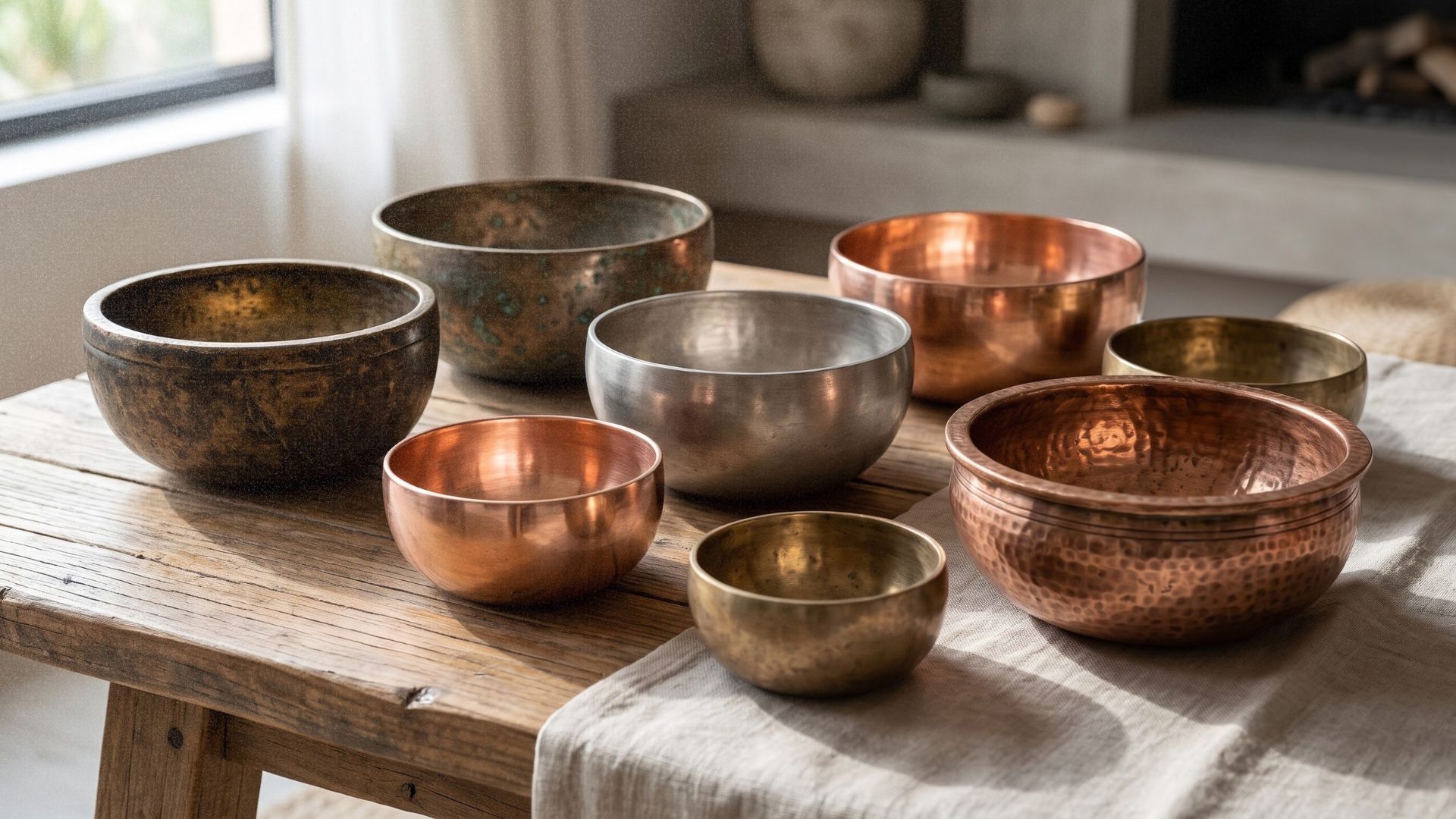
No two bowls are alike. Metal composition, wall thickness, and shape all decide which overtones surface and how long they're willing to stay.
Zen Bell's collection reflects that range of character. Some bowls carry a bright, quick note, overtones that rise and settle quickly, well suited to those moments you need to surface quickly from a dense stretch of work. Others hold something lower and slower, where the beating between tones unfolds unhurried and deep, giving you room for one long, full breath before the sound finally lets go.
Choosing a bell isn't about finding the "correct" one. It's about noticing which frequency matches how you feel that day, so that when it rings, it doesn't land as one more urgent ping to silence, but as a quiet pause you were actually glad to receive.
A pause longer than the pace of the day
The bell was never meant to hold you or slow you down. It rings once, gently, and offers ten quiet seconds to return to the present before your day continues.
But those ten seconds mean nothing if the sound underneath them is hollow.
The difference between a notification you learn to ignore and a bell you actually want to pause for comes down to exactly this: whether it's real.
No reading. No sprawling libraries. Just you, and one honest bell, calling you gently back to stillness.