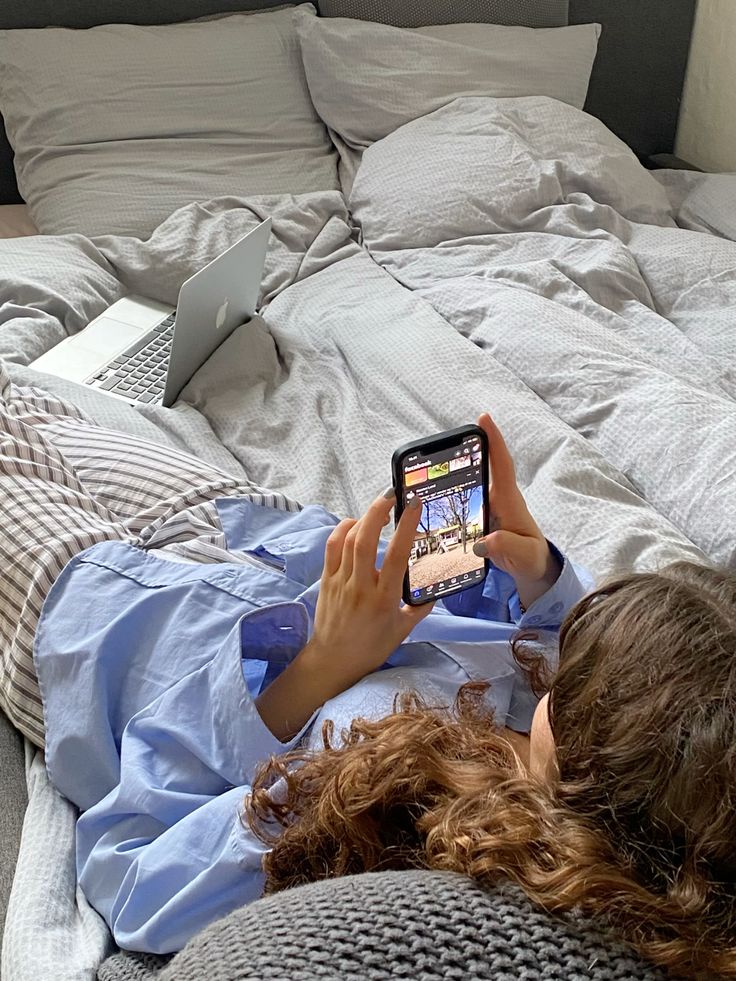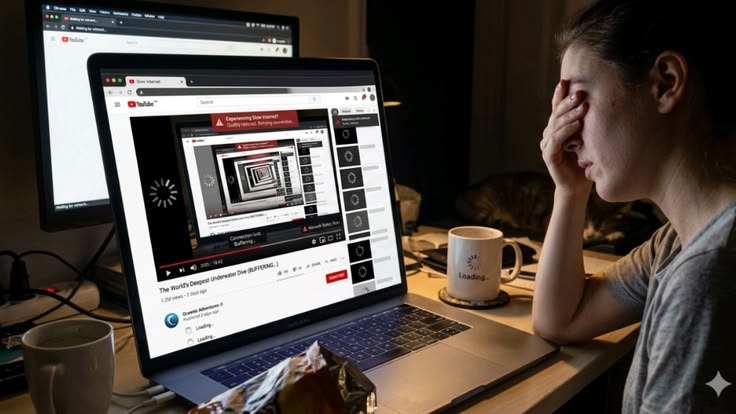
You sat down for ten minutes. An hour later you're still there, and the odd part is that you feel emptier than when you started, not better.
There's no mystery about why you chose it. Scrolling is the lowest-effort rest available: nothing to plan, nowhere to go, no decision to make at a point in the day when deciding is the last thing you want to do.
The problem is what it does and doesn't do once you're in it. So, why an hour of this leaves you flat, and what rest looks like when it actually works.
Why an hour of scrolling leaves you flat
Your body is completely still. Your senses are not, and that mismatch is most of the answer.
Every video is a small emotional event. Something funny, something sad, something infuriating, something that makes you slightly envious. Dozens of them in a session, each one landing a few seconds after the last. Nothing in there is demanding, so it doesn't feel like work, but your system never gets long enough to come back down to baseline between them.
There's also no ending. A film finishes, a chapter closes, a walk arrives home. A feed has no natural stopping point, so the stop has to come from you, usually as a decision you make with mild self-reproach. That's why an hour of it produces no sense of completion. You didn't finish anything. You stopped.
And unlike most rest, it leaves nothing behind. No conversation, no chapter read, no thing made, not even the memory of what you watched.
What research links to heavy use
The broadest evidence we have is a systematic review and meta-analysis published in Psychological Bulletin in 2025, covering 71 studies and 98,299 participants. The attention side of the same research is in Why You Can't Finish a Movie Anymore.
Heavier short-form video use was associated with higher anxiety, depression and stress. The effects were described as small but statistically significant, which is worth saying out loud, because the headline version of this research usually sounds more dramatic than the numbers are. There was also a link with sleep disturbance, which makes sense from two directions: fast content produces arousal that delays falling asleep, and an endless feed quietly eats the hours you meant to sleep in.
Two findings cut against the simple story, and they're the ones worth knowing.
First, the review found no significant overall association with body image or self-esteem, despite that being the harm people most often assume. Results varied by what kind of content people watched, but the pooled effect wasn't there.
Second, time spent was the weaker predictor. The stronger associations came from studies using addiction-style scales, the ones asking whether you open it without deciding to, lose track of time, or struggle to stop. Hours per day mattered much less than whether the use was compulsive.
And all of this is correlational. The authors are explicit that the arrow could run the other way: people who feel anxious or low are also more likely to reach for a feed, which would produce identical data. If you've had a hard week and spent more of it scrolling, that may be a symptom rather than a cause.
The two traps
Two mechanisms do most of the damage, and both are structural rather than personal.
The comparison loop
A feed shows you other people's best edit: the holiday, the promotion, the renovated kitchen, the body on a good day in good light. You know it's curated. Comparison still happens, because it runs automatically and doesn't ask your permission first. The result is an unflattering measurement you never chose to take.
The endless feed
Almost everything else you do has an edge built into it. The feed is designed not to, because its success is measured by the absence of a stopping point. This means every single stop has to be an act of will, performed by the version of you with the least willpower left in the day. That isn't a fair contest, and losing it isn't a character flaw.
What actually restores you
Real rest has three recognisable features. Fewer inputs rather than more. A clear beginning and end. And you stand up lighter than you sat down.
Measured that way, a walk with no headphones counts. So does lying in a dark room doing nothing, making something with your hands, cooking slowly, or talking to one person face to face. All of them are low-input, bounded, and leave a trace behind.
Note that none of these are "doing nothing." Rest isn't stillness, it's giving your senses less to process, which is why chopping vegetables rests you and lying in bed scrolling doesn't. We put together a longer menu, sorted by how much time you have, in Analog Rest.
One quiet minute as a reset
If that's more than you can organise tonight, start with the smallest unit: a short stretch of quiet with a clear beginning and a clear end. The boundary is the active ingredient. A minute that starts and stops on purpose feels different from a minute of drifting.
One thing to expect: for many people complete silence makes thinking louder rather than quieter. With nothing to attend to, attention goes looking and finds the unresolved thing. A single sustained sound is often easier to rest attention on than silence.
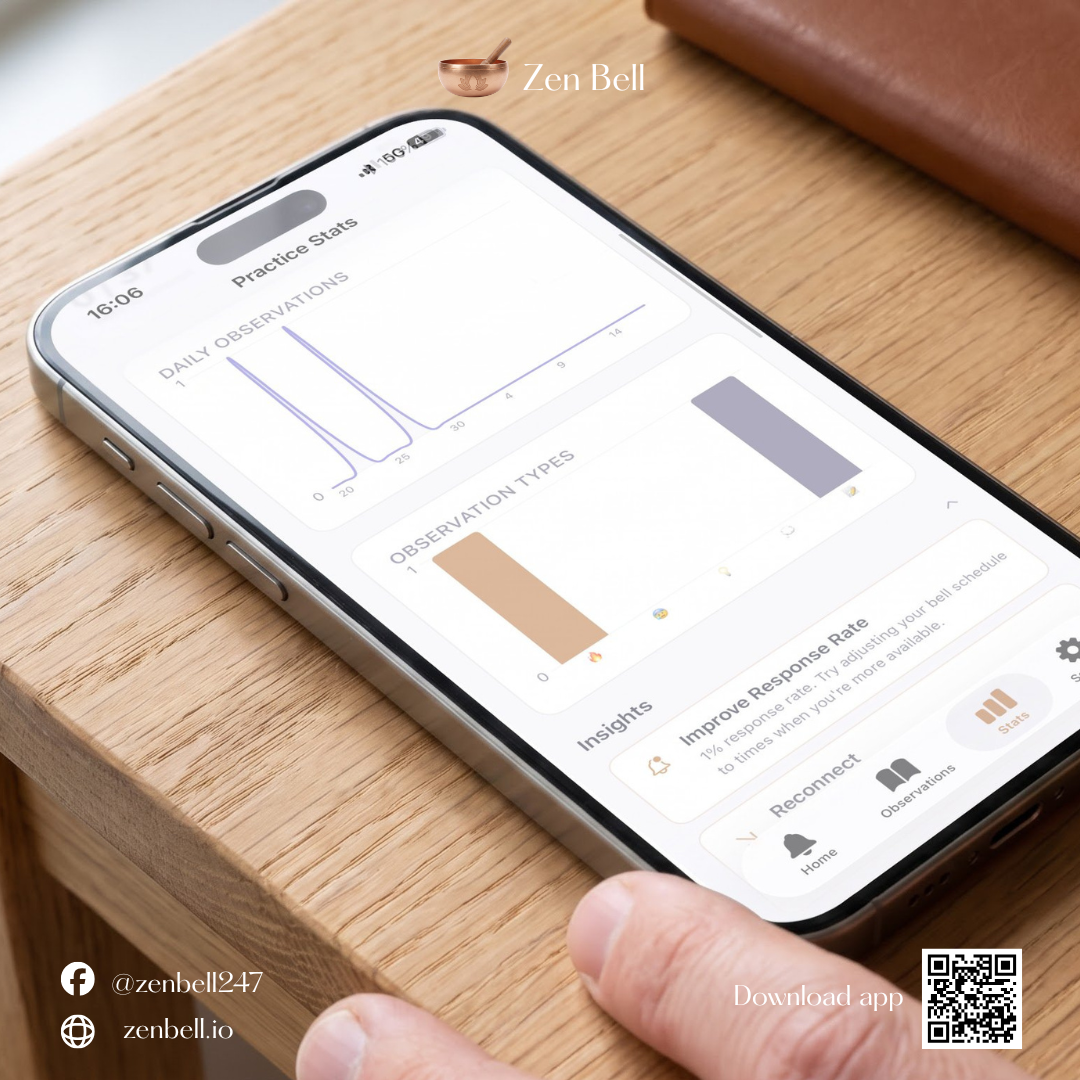
Here we should be open with you: we also build Zen Bell, a small meditation bell app made by the team behind this blog. It does one thing. It rings a bell, holds a quiet stretch of time for you, and then gets out of the way. No streaks, no badges, no leaderboards, nothing to scroll. A small bell amid big days.
Keep scrolling, just not as the default
None of this is an argument for deleting everything. Short video is genuinely funny, it's how a lot of people stay in touch with friends, and a puritan relationship with your own phone is its own kind of exhausting.
The change is smaller. Give it a window, so it's something you chose rather than something that happened. Pick your other rest first, before the phone is in your hand, because at 9pm you'll take whatever requires no decision. And keep it off the bed, which is where it does the most damage to sleep, and where bed rotting starts.
One honest note. If scrolling is the only thing that feels bearable at the moment, and that's been true for weeks, it's worth talking to a doctor or a therapist. Not because of the scrolling. Because of what it might be covering.
Rest isn't the absence of activity. It's the absence of input, which is why the most tiring hour of your evening can be the one where you didn't move.
Tonight, put the phone in another room for twenty minutes and do anything else. Then notice how you feel. That's the whole experiment, and it's cheap to run.