
You've just spent ten days away, and you're back at your desk feeling like you need a holiday to recover from the holiday. The photos look wonderful. Your body disagrees.
It's a common outcome, and it usually has the same causes: too many places in too few days, early flights and late trains, and a quiet pressure to see everything because you may never come back. Somewhere in all that movement, the rest never actually happened.
Slow travel is the alternative. Fewer stops, longer stays, and enough space in the day for the trip to feel like a break. Here's how to plan one, and why it tends to leave you in better shape than the packed version.
What slow travel means
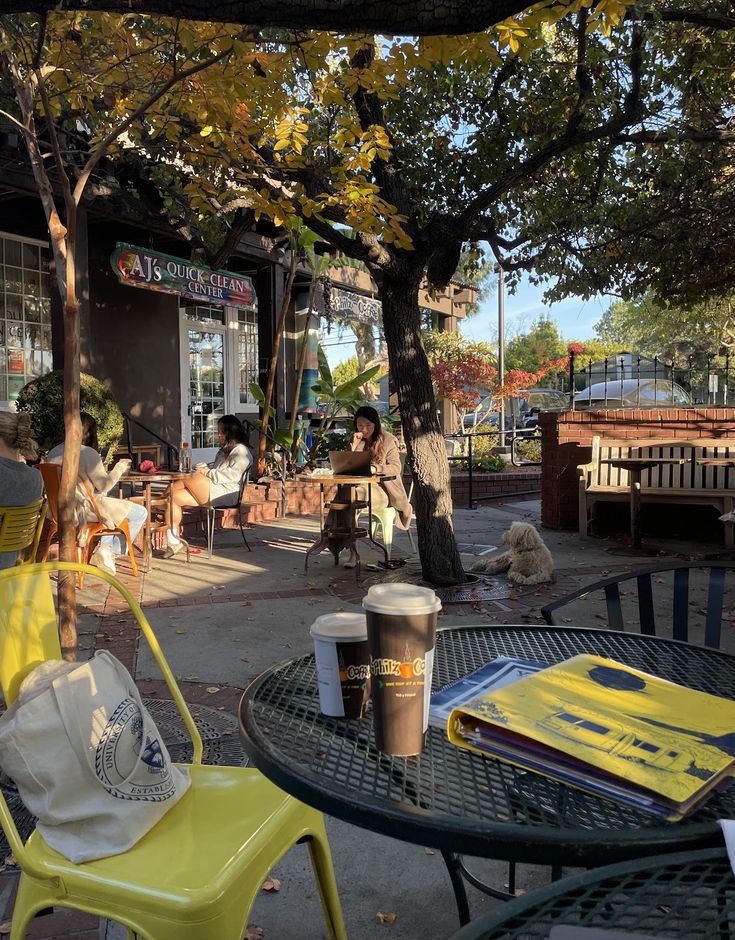
Slow travel means visiting fewer places and staying longer in each one, with more attention on ordinary daily life than on ticking off attractions.
That's it. It doesn't require a long trip or a big budget. Three days in one town, walked properly and without a schedule, counts as slow travel. Three weeks spent changing hotels every two nights does not.
The contrast is with the itinerary-first style of travel, where the trip is measured by how many cities, museums, and viewpoints you managed to fit in. Nothing is wrong with seeing famous things. The difference is whether the list is running you or you're running the list.
Why packed itineraries wear you out
Every move costs more than the hours it takes. Packing, checking out, finding the station, locating the next place, working out where the nearest food is: each transfer resets you to zero and asks you to solve the same small problems again.
Those small problems add up in another way too. On an unfamiliar trip, almost nothing is automatic. Where to eat, which direction to walk, whether to book ahead, which ticket to buy. Dozens of minor decisions a day are tiring in a way that's easy to miss, because none of them feels difficult on its own.
Then there's the pressure to make it count. When a trip feels rare or expensive, leaving a morning empty can feel wasteful, so the schedule fills up and the rest disappears.
Short sleep and irregular meals finish the job. A few nights of five hours, eaten at odd times, and the whole trip starts running on adrenaline rather than energy.
Research on vacations supports the intuition here. A meta-analysis of vacation studies found that holidays do improve health and wellbeing, but the benefits fade quickly once work resumes. More usefully for planning, the same body of research suggests that what matters most isn't which activities you do, but the quality of the experience: relaxation, psychological detachment from work, a sense of control over your time, and genuine enjoyment. Those are exactly the things a rushed itinerary squeezes out.
How to plan a slower trip
1. Cut the number of stops in half
Take your draft itinerary and remove half the destinations. Two cities instead of four, or one region instead of three. You'll lose some breadth and gain far more depth, and you'll spend your days experiencing places rather than moving between them.
2. Stay at least three nights in one place
Three nights is roughly the point where a place stops being logistics. By the second morning you know where the coffee is, which direction the station is in, and how long things take. That familiarity is what lets you relax.
3. Plan one main thing a day
Choose a single anchor for each day: one museum, one hike, one long lunch, one neighborhood. Leave the rest open. You'll almost always find something unplanned to fill it, and if you don't, that's the rest you came for.
4. Choose a neighborhood, not a landmark
Staying next to the main attraction usually means staying in the most expensive, most crowded, least representative part of town. A residential area a little further out gives you bakeries, markets, and the ordinary rhythm of a place, which is often what people remember years later.
5. Build in a nothing day
Put one completely unplanned day in the middle of the trip. No tickets, no reservations, no targets. It feels extravagant when you're planning and obvious when you're there.
6. Keep some routine
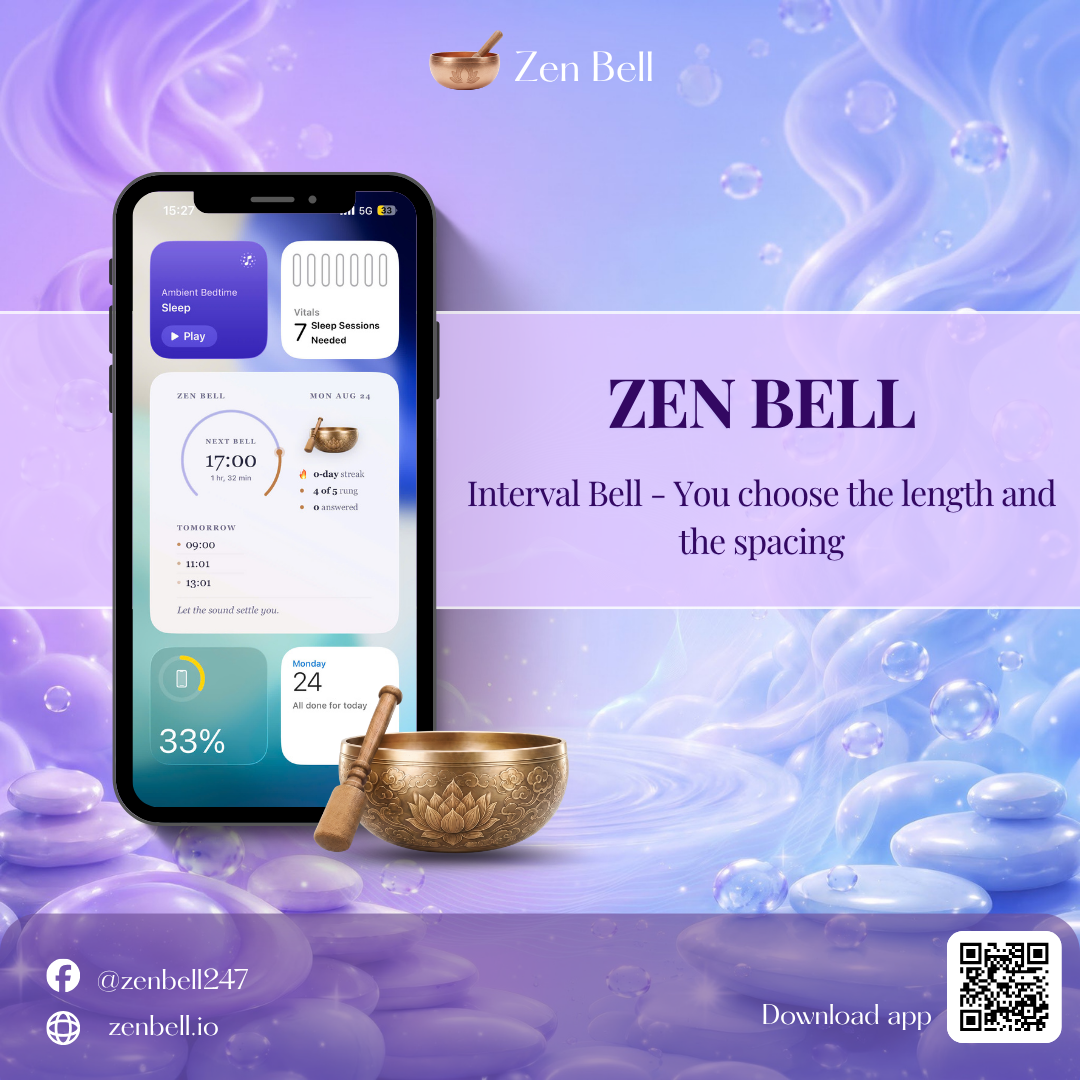
A little familiarity travels well. A morning walk, coffee at the same café, or reading before bed gives the trip a shape and helps you sleep better than a schedule that changes completely each day. A short daily practice works the same way, and it doesn't take up space in your bag. Five quiet minutes with a bell, at the start of the day or before sleep, gives you one familiar thing in an unfamiliar place, and it's the same practice whether you're at home, in an airport, or in a room you've never slept in before.
Our own app Zen Bell was built for exactly this kind of use: an opening bell, a closing bell, and nothing else to look at.
How to be present while you're there
Take fewer photos, and look at them in the evening rather than while you're standing in front of the thing itself. A trip experienced mostly through a screen is oddly hard to remember afterward.
Eat slowly and stay longer. Sitting for an extra half hour in one café often gives you more of a place than three more stops would.
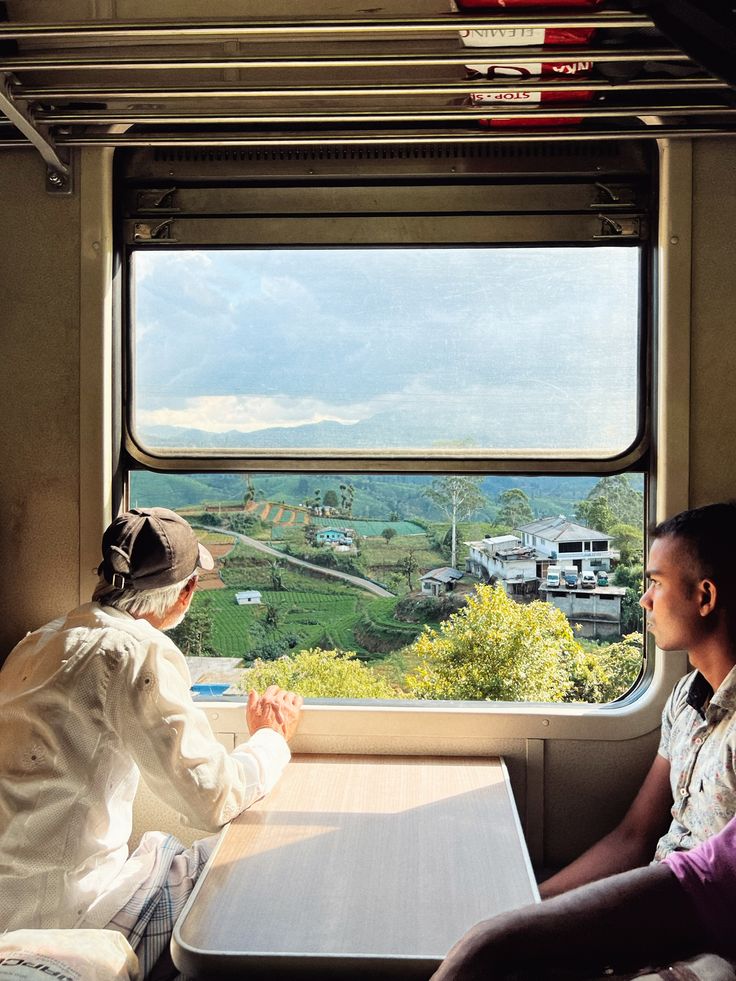
Walk where you can, and use local transport when you can't. Both put you at street level, among people going about their day, which is where the texture of a place actually lives. If you want a way to walk more attentively, the approach in The Mindful Autumn Walk works anywhere.
Talk to people, even briefly. A few words with a shopkeeper or a neighbor at the next table will stay with you longer than another photograph.
And allow yourself to skip something famous if you're tired that day. Missing one landmark costs very little. Pushing through exhaustion costs the rest of the trip.
None of this requires distance. A town two hours away can deliver the same effect, and often more easily.
A slow weekend a few times a year is usually more restorative than one big annual trip, because the recovery arrives when you need it rather than once every twelve months. Less travel time, lower cost, and no flights make it easy to repeat, which is the real advantage.
Coming home well
Leave a buffer day between getting back and returning to work. Arriving home on Sunday night and starting Monday morning is the fastest way to erase whatever rest you gained.
Use that day for the boring things: unpack, do the laundry, buy food, sleep. Research on vacations suggests the benefits fade fastest when people return straight into a pile of unfinished tasks, so a calmer re-entry is worth protecting.
Then write a few lines about the trip while it's fresh: what you enjoyed, what you'd skip, what you'd do differently. It takes ten minutes and it makes the next trip better. Just keep it light, rather than turning your holiday into another project to optimize, which is how rest quietly becomes work, as we've written about in Wellness Burnout Is Real.
The most memorable journeys usually aren't the ones with the most stops. They're the ones with enough room in them to notice where you were.
For your next trip, try the simplest version of this: open your itinerary and delete one destination. See what fills the space.