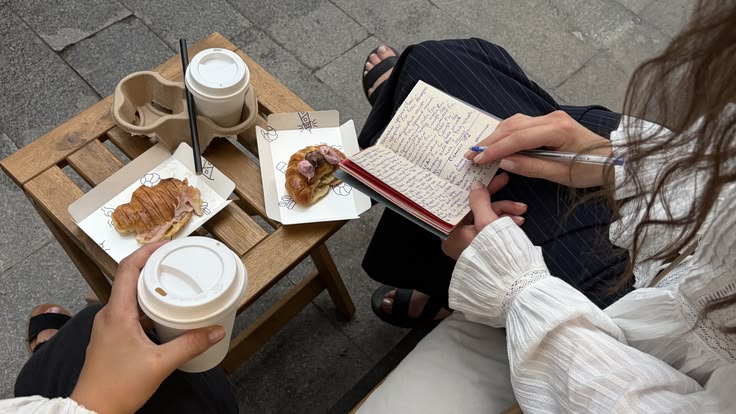
There's a particular kind of sentence that only gets written when no one else is going to read it. Not a better sentence, necessarily. Just a truer one, the kind that skips the part where you'd normally soften it, explain it, or make sure it lands the right way with an audience of one imagined reader who isn't actually there. Take away the reader entirely, even an imagined one, and something in the hand relaxes a little before it even starts writing.

The audience you didn't know was standing there
Most writing carries a faint awareness of being read, even writing that will never technically be seen by anyone. A text message drafted and deleted twice. A journal entry that quietly performs self-awareness for a reader who doesn't exist. This isn't dishonesty exactly. It's just what happens when a habit of being read, built over years of comments, messages, and shared documents, doesn't fully switch off just because the page in front of you happens to be private.
You don't usually notice this pressure until it's gone. It shows up as the difference between a sentence you wrote for someone and a sentence you wrote because it was simply, plainly true, and there's often a real gap between the two, even when you're writing to nobody at all.
What actually changes when no one is watching
When a space is genuinely private, not "private until someone asks to see it," but actually closed, something small shifts in what gets written down. The sentence that would normally get revised into something more presentable gets to stay exactly as messy, as boring, or as unresolved as it actually is. There's no one to disappoint with an unfinished thought, so the thought gets to stay unfinished, right there on the page, instead of being tidied into something that reads better than it feels.
This isn't really about secrecy. Most of what ends up written in a genuinely private space isn't secret at all. It's just unpolished, small, unremarkable in exactly the way real thoughts usually are before anyone edits them for an audience. A private page doesn't ask you to make anything mean more than it does. It just holds what's actually there.
Why this is a relief, not just a preference
Being read, even kindly, even by people who love you, requires a small amount of translation. You choose words that will land the right way. You leave out the parts that need too much context to explain. None of that is a flaw in how people communicate, it's simply what communication with another person requires. But it does mean that almost nothing you say out loud, or type into a shared space, is quite the unfiltered version.
A space with no reader removes that translation step entirely. Not because honesty with other people is bad, but because everyone benefits from having at least one place where nothing needs translating first. The comfort isn't in hiding something. It's in not having to explain anything before you're even allowed to think it.
A page that stays exactly as private as it looks
This is easy to say and harder to trust completely, especially with anything digital. A private folder can still sync somewhere. A "just for me" note can still end up backed up to a server you never think about. The comfort of not being watched only really works if the not-watching is actually true, not just implied by a settings menu you never checked.
A page that stays on your device, with nothing quietly listening on the other end, gets to be as unfinished, as ordinary, or as strange as it needs to be. Nobody is going to open it later and wonder what you meant. Nobody is going to see it at all.