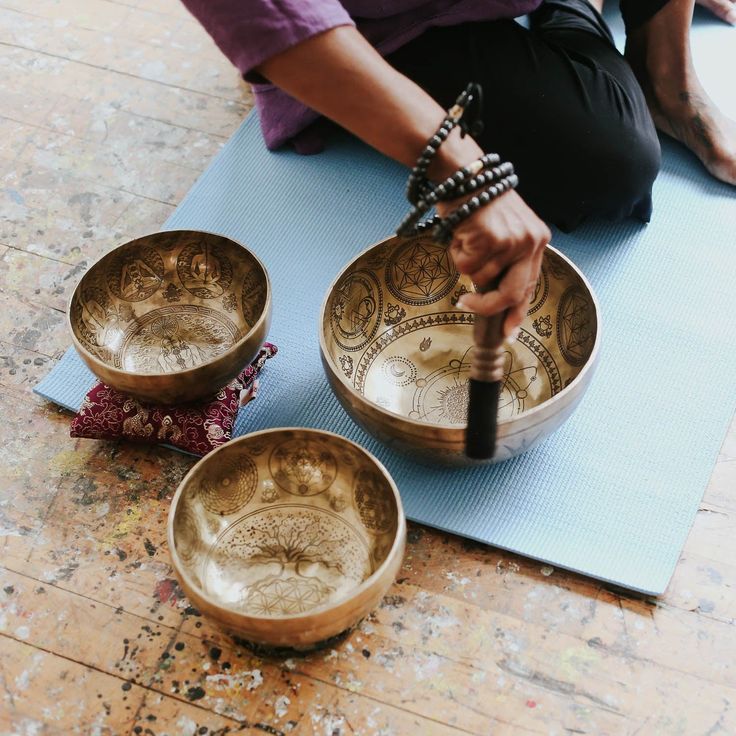
The story gets repeated often enough that it starts to sound like established fact: singing bowls are five thousand years old, forged from seven sacred metals, each one tied to a planet, gold for the sun, silver for the moon, and so on down the list. It's a good story. It's also worth asking, before repeating it again: is it actually true?
What the evidence actually shows
The honest answer is that the exact origins of the singing bowl are still debated among researchers, and there isn't a single, settled account that scholars broadly agree on. What the available evidence does support is more specific and more modest than the popular version. Metal bowls of this kind belong to a much broader family of hand-worked standing bells that developed within a long metalworking tradition across the Himalayan region, primarily in what's now Nepal and northern India. Written records or physical evidence specifically describing these bowls as sound instruments, rather than ordinary metal vessels used in daily life, are notably thin before the twentieth century, which is a gap that's easy to miss when the "ancient tradition" framing is repeated as often as it is.
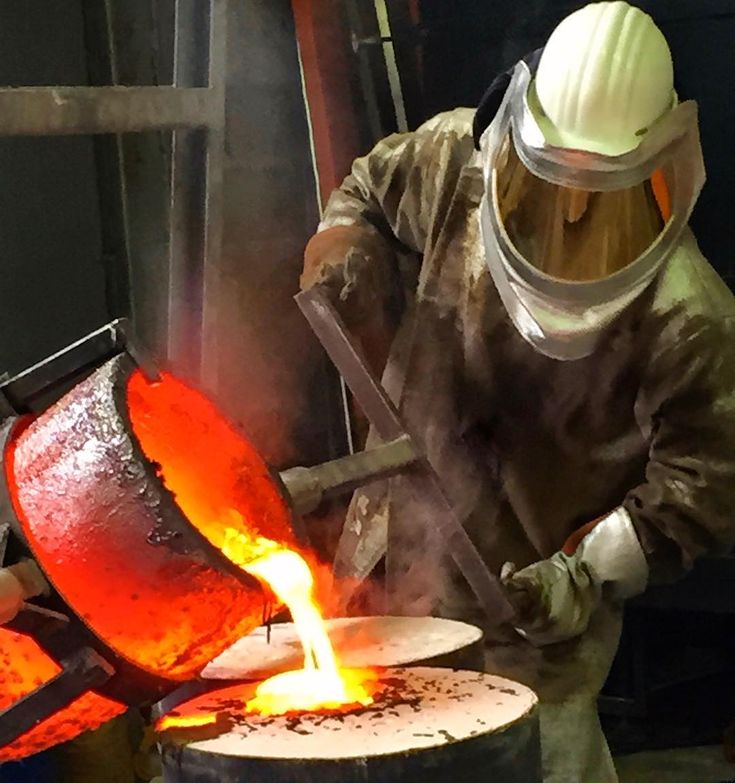
The "five thousand years, seven sacred metals" version doesn't hold up well under scrutiny. Multiple metallurgical studies, including a widely cited 1996 analysis and a later study examining more than a hundred bowls made between the sixteenth and nineteenth centuries, have consistently found bronze, an alloy of copper and roughly 20 to 23 percent tin, with occasional small traces of iron. None of them found gold, silver, or mercury in any meaningful quantity. The seven-metals idea appears to trace back to older alchemical writings from the Near East and Mediterranean world, unconnected to the Himalayas or Tibetan Buddhism, and it became closely associated with singing bowls largely through marketing from the twentieth century onward, well after the bowls themselves had already existed for generations. Similarly, describing the bowl primarily as a sound-healing instrument is largely a twentieth-century development, one that scholars researching the instrument's history have specifically pointed to as a modern cultural construction rather than a continuous practice. That doesn't make the practice meaningless to the people who use it today, but it does mean it isn't the unbroken ancient tradition it's often presented as.
The craftsmanship is the genuinely interesting part
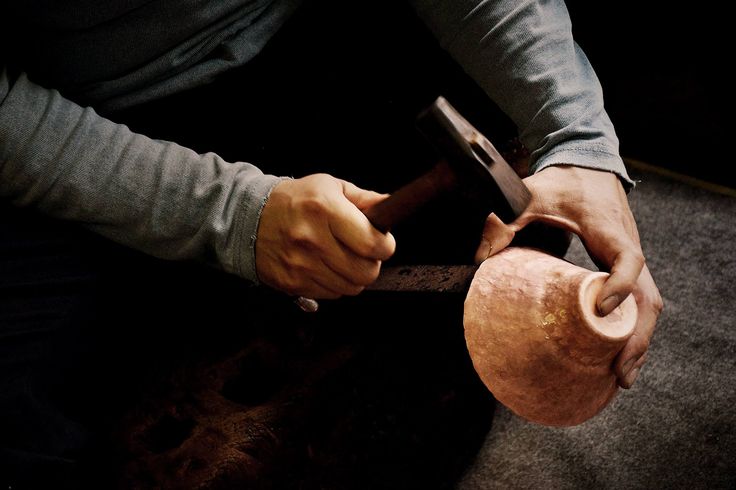
Set the origin story aside, and what's left is a real, well-documented technique, and it's more interesting than the myth. Traditional bowls are shaped through a process called annealing: a piece of bronze is heated, hammered, and cooled, then heated and hammered again, sometimes over hundreds of individual strikes, until it slowly takes the shape of a bowl. This method of working metal broadly traces back to Near Eastern metalworking practices dating to around 3,000 BCE, spreading across Asia over the following centuries through trade routes and craft exchange, adapted by different regional traditions along the way.
This is also where the real explanation for each bowl's distinct sound lives, not in a secret alloy, but in the hammering itself. Repeated heating and cooling reshapes the crystalline structure of the bronze at a microscopic level, relieving the internal stress that builds up as the metal is worked, and hand-hammering introduces small, unrepeatable variations in thickness across the bowl's surface. Two bowls made from the same alloy, by the same craftsperson, in the same week, will still ring slightly differently, because no two hammered surfaces are ever quite identical, down to the exact placement and force of each strike. That's a real, physical, measurable fact about the metal, and it accounts for the "no two bowls sound alike" claim far better than any story about sacred ingredients does. A skilled maker will often strike the rim periodically throughout the process, listening for how the tone shifts, and adjusting the hammering accordingly, which makes the final shape as much a product of careful listening as of metalwork.
From everyday object to global symbol
For a long stretch of their history, bronze bowls of this kind served ordinary purposes. They were used as vessels, and their metal content also made them a practical store of value, something that could be traded or melted down if needed, not unlike other bronze goods across the region. Their transformation into a globally recognized wellness object happened relatively recently: commercial workshops in Kathmandu, Patan, and Tibetan diaspora communities in northern India began producing them in larger quantities for Western buyers starting in the early 1970s, which is roughly when the sound-healing framing familiar today started to take hold outside the region.
Why the real story holds up better than the myth
An object shaped by generations of metalworkers refining a genuinely difficult hammering technique, with measurable physical differences between every single one, is a more interesting object than one wrapped in an invented ingredients list. The craftsmanship doesn't need help from a legend to be worth paying attention to. It was already specific, skilled, and a little bit unpredictable, long before anyone added planets to the story.
A simpler kind of interesting
It's worth sitting with the idea that the plainer version of a story can hold up better than the embellished one, not because it's less impressive, but because it's actually true, and a real, hammered piece of bronze with its own particular ring doesn't need an invented history to earn its place.