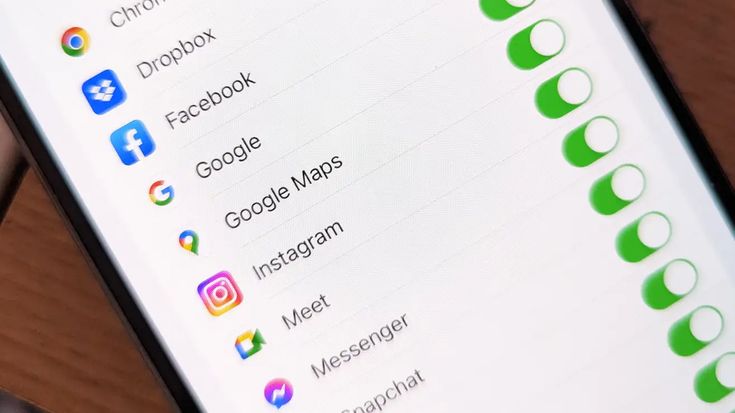
There's a familiar little moment that happens after downloading almost any app meant to help with balance. A habit tracker, a digital detox tool, something with a calm-sounding name and a soft color palette. Before it does anything useful, it asks. For location. For contacts. For permission to see how the phone is used throughout the day. Somewhere in the middle of tapping "allow" on the fourth request, a small, quiet thought shows up: an app meant to help someone use their phone less seems to want to know an awful lot about how they use it.
It's not a dramatic realization. It's more of a flicker, easy to dismiss, easy to tap past. But it lingers a little, because it points at something slightly off. The tool was supposed to be on the person's side, and yet the first thing it did was ask for more.

What trust actually seems to be made of
Somewhere along the way, trust in an app stopped being about how many things it could do. A calendar that syncs everywhere, a tracker that charts every metric, a dashboard full of insights, none of that is what makes someone relax around a piece of software anymore. What seems to build trust instead is something quieter: an app that doesn't ask for more than it needs, and doesn't treat a person's attention as something to be collected and studied.
That's a strange shift for an industry that spent a decade optimizing for exactly the opposite. More data was supposed to mean more personalization, more insight, more value. In practice, for a lot of people, it just means more that could go wrong, more places their habits are sitting on someone else's server, more decisions they didn't really make about who gets to see them.
Why staying offline is a choice, not a limitation
An app that works without an account and without a network connection isn't necessarily behind the times. It's making a specific decision: that whatever happens inside it belongs to the person using it, and nowhere else. There's no dashboard sitting on a distant server tracking how often someone opens it or how long they stayed. There's no login to remember, because there's no account for the data to live under in the first place. If the phone loses signal in an elevator or on a plane, none of it stops working, because it was never depending on a connection to begin with.
This isn't a claim that data is dangerous or that every connected app has bad intentions. Plenty of useful software genuinely needs a network to do its job. It's simply a different premise: instead of designing around collecting more, some tools are designed around needing less, and that decision changes what the experience actually feels like to use.

A notebook nobody else can read
A private journal is a small, clear example of what this looks like in practice. Not a shared notebook, not one with a "share" button quietly waiting in the corner, not one syncing to a cloud account somewhere. Just a notebook that stays exactly where it was written, on the one device it was written on. Writing something down changes when there's no audience for it, even a theoretical one. A private thought stays private not because of a policy promising it will, but because there was never a version of it sitting anywhere else to begin with.
Where Zen Bell fits into this
This is close to how Zen Bell was built. There's no account to create, no login, no data leaving the device to be studied somewhere else. The bell rings, the journal stays on the phone, and none of it depends on a connection to work. It's not a feature added on top of the app. It's closer to the starting assumption the rest of the app was built around.
Maybe that's really what the shift comes down to. Not a promise that nothing could ever go wrong, because no honest tool can promise that. Just fewer places for something to go wrong in the first place, and a little less to ask forgiveness for later.