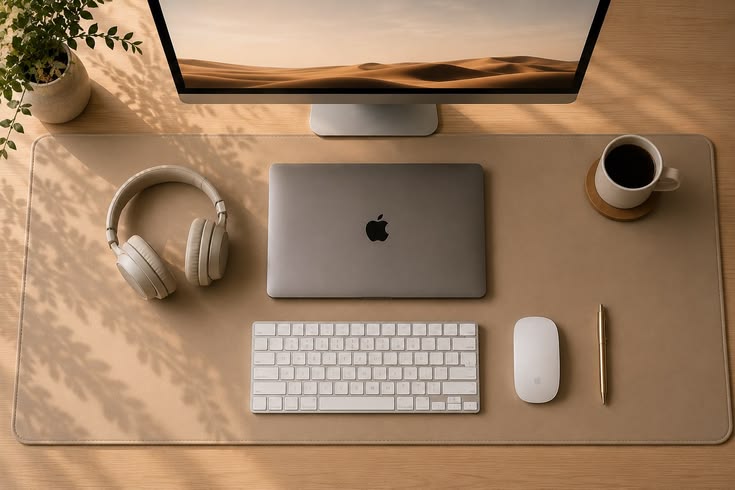
Design writers are calling it quiet luxury, or sensory minimalism. In plain terms: people are choosing leather, wood, and stone for their home offices instead of shiny screens and gadgets. A wooden desk doesn't light up. It doesn't buzz with notifications. It just sits there, looking like exactly what it is. That's the appeal. Nothing about it is trying to impress you.
Why this is happening right now
Here's the connection to screens. It's gotten harder to trust what you see or hear on a screen. A video call might not be who it looks like. A voice might be recorded, or generated. At the same time, apps that promise calm, things like meditation apps, sleep sound machines, and anxiety playlists, have become a huge industry. Most of these apps use sound that was never recorded from anything real. It was built by software.
So people are tired of not knowing what's real. They want objects, and now sounds, they can trust.

The same problem has reached sound
For a long time, a computer-made sound was easy to spot. It sounded fake. That's no longer true. Software today can create a sound that's very close to a real singing bowl, a real rainstick, or a real gong, without any of those objects actually existing. Nobody is doing this to trick people. It's just what the tools can do now. A lot of meditation and sleep sound content is made exactly this way.
But this creates a new problem for the listener. In the past, if a sound sounded calm and natural, it probably was. Now that's not a safe guess anymore.
Why a real bowl is hard to copy exactly
A real singing bowl is hard to fake for one specific reason: the way its sound fades out. When you strike a real bowl, the sound rings and slowly dies away in a way that depends on tiny imperfections in that exact bowl. No two bowls fade out exactly the same way. Software can copy the pitch and the tone closely, but the way it fades still tends to sound slightly different to a careful listener. It's a bit like a printed photo of wood grain: it looks right in a picture, but doesn't feel right when you run your hand over it.

This isn't a case against synthetic sound
To be clear, computer-made sound isn't bad. It works fine for movies, games, and background music, where nobody expects it to be "real." Even a lot of sleep and anxiety content works perfectly well even though it's synthetic. The point isn't that synthetic sound is wrong. The point is narrower: when a sound's whole purpose is to feel calm and genuine, people are starting to care whether it actually came from something real.
Why this will keep mattering
As synthetic sound keeps getting better, real sound doesn't become less valuable, it becomes more valuable. The better the copies get, the more people notice and appreciate the real thing, the same way a genuine antique becomes more interesting once cheap replicas are everywhere.