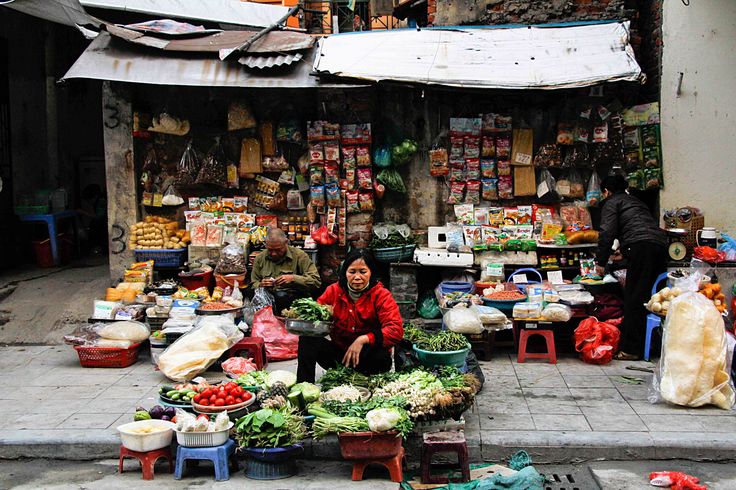
It has been raining at the market since dawn, and almost no one is buying. Two vendors sit under neighbouring awnings with the same wet crates of fruit and the same empty aisle in front of them. One spends the morning frowning at the sky, rearranging oranges that don't need rearranging. The other pulls her stool closer to the next stall, pours tea for the woman who sells herbs, and swaps stories about grandchildren while the rain drums on the plastic roof.
By noon, both have sold about the same. But they have lived two very different mornings.
It is worth looking closely at why what we carry inside shapes our days so much, and also at where that power ends.

The same day, lived two ways
We tend to describe our lives as a list of events: what happened, what went wrong, what got done. But events are only half the picture. The other half is how we are while they happen.
A student checks her exam results on the bus and sees a grade lower than she hoped. She reads it twice. In one version of the day, that number follows her everywhere. Lunch tastes of it, a friend's joke falls flat, and the evening goes to replaying every mistake. In another version, she lets herself feel the disappointment, texts her sister, makes a note of what to study differently, and still notices that the bus driver waved her on when she was a coin short. The grade is the same both times. The day is not.
It is easy to judge the first market vendor, but that would miss something. Maybe her rent is due this week. Maybe she slept badly. The point is not that one person is better than the other. The point is that life is made not only of what happens to us, but also of how we are inside it.
What research suggests
Researchers have studied this in an interesting way. In 2010, Harvard psychologists Matthew Killingsworth and Daniel Gilbert built an iPhone app that asked people at random moments what they were doing, what they were thinking about and how they felt. On average, people reported that their minds were wandering 46.9 percent of the time. The more striking finding was that where people's minds went turned out to be a better predictor of how happy they felt than what they were actually doing.
The study has honest limits. The sample was made up of people who, in 2010, owned an iPhone and chose to download a happiness app. It also does not show that all mind-wandering is bad, since a drifting mind is the same one that plans, imagines and solves problems. Still, the core idea is a gentle one. Where our attention rests seems to shape how a moment feels, sometimes more than the moment itself.
Long before smartphones, the Austrian psychiatrist Viktor Frankl reached a related idea under the hardest conditions imaginable. In Man's Search for Meaning, first published in 1946, he drew on his years as a prisoner in Nazi concentration camps. One of his best-known reflections is that even when almost everything is taken from a person, one freedom remains: the freedom to choose how to meet what is happening.
It is worth reading Frankl carefully. He was not saying that suffering is fine, or that a positive attitude fixes everything. He was describing a small space of choice that remained even when almost nothing else did. That is a quiet claim, and a far more honest one than "change your thoughts, change your life."

Small choices that add up
Our inner state rarely comes from one big decision. It is built in small moments, many times a day.
The first sentence you say to yourself in the morning. "Ugh, Monday" and "Okay, one thing at a time" start the same day in two different places.
What you choose to notice on the way to work. The traffic, yes. But also the smell of bread from the bakery, or a child in a yellow raincoat jumping into every puddle.
How you retell a hard day to someone you love. A nurse walks home at dawn after a night shift that went badly. When her partner asks how it was, she can tell it as one long list of everything that broke. Or she can include the patient who squeezed her hand before falling asleep. Both versions are true. The one she tells is the one she will carry.
None of these choices is dramatic. But a day is made of hundreds of them, and so is a life.
Where mindset ends
A good mindset has real limits, and it matters to say so plainly. It cannot replace a steady income, good health, a safe home or help from other people. When things become too much, the answer is not to try harder to think differently. It is to reach for real support, from the people around you and from those whose work is to help. Tending your inner life is one part of looking after yourself, never the whole of it.
Tending what's inside
If our inner life is shaped in small moments, it can also be cared for in small moments.
Pause for a few seconds to check in. Somewhere in the middle of the day, stop and ask yourself how you are right now. You don't need to fix the answer, just notice it. A gentle cue can help. For some people it is a soft bell from Zen Bell. For others, it is the click of the kettle switching off.
Speak to yourself as you would to a friend. If a friend got a disappointing result, you would not call them hopeless. You would say, "That's rough. What do you need?" Offer yourself the same sentence.
Notice one small thing that is okay. This is not about pretending everything is fine. It is about keeping the whole picture in view. An elderly man tending the pots on his windowsill each morning knows this well. The basil came back after he nearly lost it. It is small, it is real, and it is his.
Back at the market, the rain has not stopped. Puddles gather along the edges of the awnings, and most of the fruit is still unsold.
No one chose the weather. But under one awning there is tea, a story about a grandson who has just learned to ride a bicycle, and laughter that carries a little way down the empty aisle.
We don't get to choose the rain. We do get some say in how we sit beneath the awning, and who we share it with.