
"I'll start at the beginning of the month. It's cleaner that way."
It sounds like planning, like the responsible version of wanting something. It's also a sentence most of us have said several times this year, about the same thing, with a different date attached each time.
This isn't an argument against goals. Goals are fine. It's an argument against the waiting room they tend to sit in, where a plan is polished for weeks while nothing actually begins, and where the date you're waiting for arrives carrying expectations no ordinary Tuesday could survive.
Why clean start dates feel so appealing
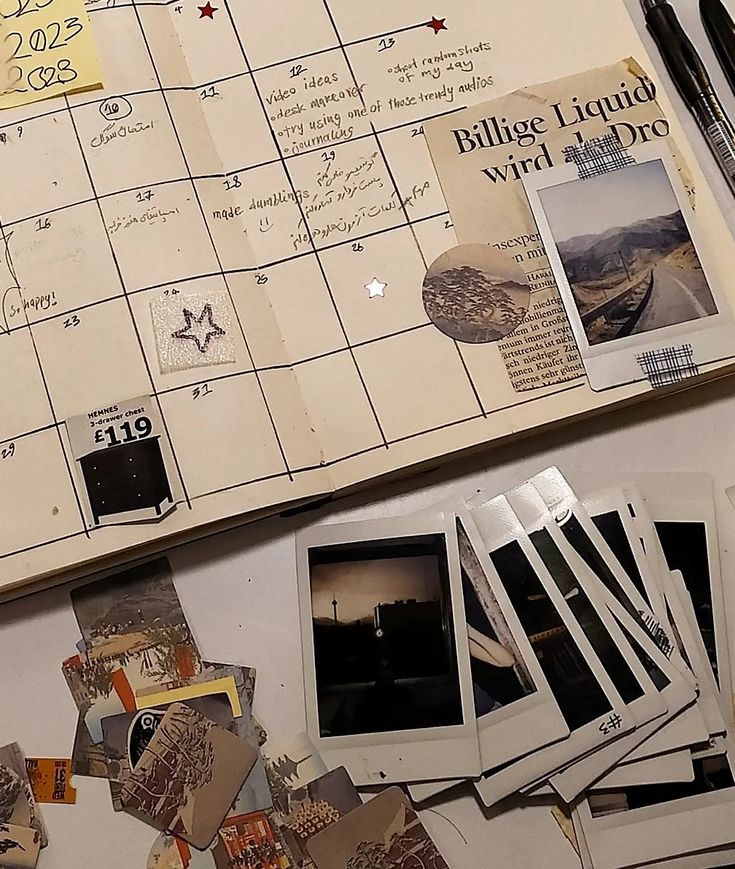
The pull is real, and it's been measured. Researchers at Wharton studied what they called temporal landmarks, the visible seams in a calendar: the start of a week, a month, a year, a birthday. Google searches for "diet" rose after those moments, as did university gym attendance and the number of people signing formal contracts committing to a change.
Their explanation matches what you feel on the 31st. A landmark puts distance between you and your past imperfections, which makes the current version of you look more capable than the one who kept not doing this. It also lifts you out of the day's mess and into bigger thinking about what your life is for.
Planning adds to the appeal, because planning feels like progress. You've made a document, chosen a schedule, imagined the first week. Nothing has changed, but something has definitely happened.
Every social feed reinforces the timing, too. The first of the month arrives with a wave of reset posts and clean templates, all of it implying that starting is something you do on a particular day rather than in a particular minute.
None of that is stupid. Landmarks genuinely do help people begin. The trouble starts when the landmark stops being a nudge and becomes a condition.
The hidden cost of waiting
One deferred day is nothing. The problem is that it rarely stays one day. Today becomes Monday, Monday becomes the first of next month, and by then something else has come up, so it becomes the month after that. The cost isn't the delay itself. It's the pressure the delay builds.
By the time the chosen date arrives, you've been imagining it for weeks, and generously. You pictured five workouts, not one. A full chapter, not three sentences. When day one turns out ordinary, and days always do, the gap between plan and reality is wide enough to read as failure.
Then the all-or-nothing reflex takes over. You miss the third, the month is spoiled, so you might as well wait for a clean one. This is where the fresh start idea does its real damage: it defines a start as something that has to be unbroken to count.
Each round teaches you something: not that you lack discipline, but that starting is an event you schedule rather than a thing you do. That lesson gets easier to apply every time.
Start smaller than the plan
The way out is less inspiring than it should be: do a version so small it doesn't need a good day.
Not "begin the writing project" but write three sentences. Not "join a gym" but walk for ten minutes after lunch. Not "overhaul my evenings" but put the phone in another room while you make dinner. The test is whether you could do it on your worst day of the week, tired and slightly annoyed, without needing to feel motivated first. If the answer is no, the version is still too big.
This feels like giving up on the ambition. It isn't. A plan gets better once it's in contact with reality, because reality tells you which parts were fantasy. You find out that mornings don't work for you, that fifteen minutes is the real ceiling, that the hard part wasn't the thing you prepared for. A plan that never starts never learns any of that.
We wrote about choosing a single change that actually holds in How to Pick One Small Change for the Month.

Treat every day as a restart
Here's the part that quietly dismantles the whole waiting habit. If any day can be day one, then missing a day costs almost nothing.
There's research on this, and it's reassuring. In a study that followed people for twelve weeks as they took up a new daily behaviour, automaticity built along a curve that flattened out after roughly 66 days on average. More usefully: missing an occasional day did not seriously impair the process, and automaticity gains resumed soon after.
So the streak was never the mechanism. Repetition over weeks was. A missed Wednesday is a missed Wednesday, not a ruined month, and the only thing that turns it into a ruined month is the rule that says you have to go back to the beginning.
Drop that rule. There is no beginning to go back to.
What to do with the planning urge
You don't have to stop planning. You have to stop letting it run unsupervised.
Put fifteen minutes on a timer and let yourself plan properly inside them. When the timer goes, write one sentence and stop: what you will do, when, and for how long. "Ten minutes of walking after lunch on weekdays" is a complete plan. It's allowed to be that short.
And watch for the tells. If you've started comparing habit tracker apps, reading reviews of running shoes, or designing a spreadsheet to record something you haven't done once yet, that's usually not preparation. It's a comfortable place to stand near the thing instead of doing it.
When a fresh start genuinely helps
To be fair to the calendar, there are times when a clean line is honest.
After a real change of circumstances, a move, a new job, the end of a long illness, your days actually are different, and building the new version around the new shape makes sense.
Ritual matters too. Sometimes you need to mark the end of a period rather than the start of one, and a date gives you somewhere to put that. Closing off a hard few months deliberately is not procrastination, which is the idea behind a short monthly reset.
The difference is simple enough to check. A landmark that helps is one you're using. A landmark that hurts is one you're waiting for.

Nothing special about monday
Tomorrow isn't better than today. Neither is Monday, or the first, or January. They're the same twenty-four hours with a more satisfying number attached, and the satisfaction is the part that keeps costing you weeks.
Whatever you've been saving for the right day: do the smallest version of it today. That's the start. There isn't a better one coming.